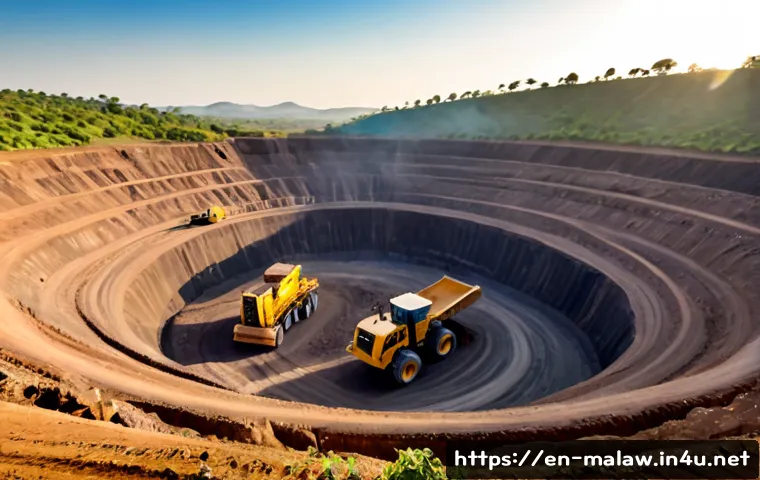
Malawi’s mining potential centers on uranium, coal, limestone, gemstones, graphite, rare earth elements, phosphate, niobium, and other industrial minerals, but commercial viability remains highly project-specific.
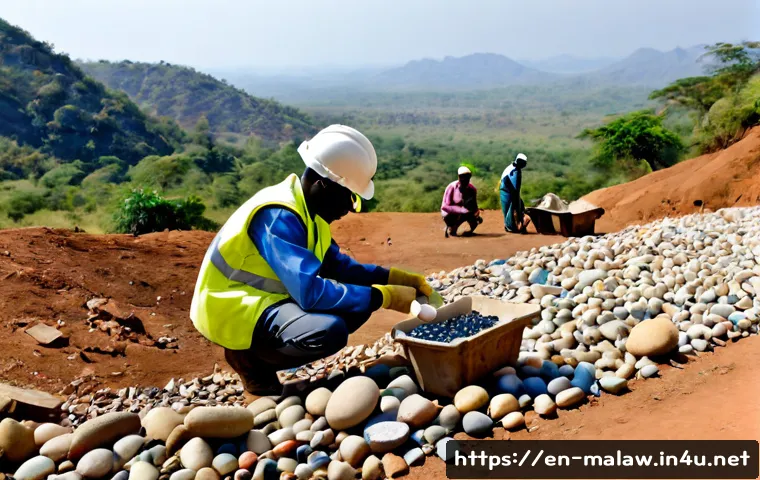
For investors and suppliers, the main decision factors are resource quality, project maturity, transport routes, power and water access, licensing, environmental obligations, and financing.
Limestone and other industrial minerals may be relevant to regional construction and agricultural supply chains, while bulk commodities can be especially sensitive to inland logistics costs.
Uranium around Kayelekera and rare earth element potential at Songwe Hill remain important reference points in discussions of Malawi’s mineral sector.
Gemstones and specialty minerals can have lower-volume, higher-value profiles, yet their quality and scalable production must be verified by location.
Mining equipment providers, geological survey firms, drilling contractors, laboratories, environmental consultants, and logistics companies may find service opportunities where direct mine investment is not appropriate.
At a Glance
- Key mineral categories: Malawi is associated with uranium, coal, limestone, gemstones, phosphate, graphite, rare earth elements, niobium, and other industrial minerals.
- Main commercial constraint: Landlocked geography can increase freight and export-logistics costs, especially for bulk minerals and equipment-heavy projects.
- Practical approach: Treat each deposit separately and verify geological data, permits, infrastructure, environmental requirements, and funding before committing capital or supplying services.
| Mineral Category | Typical End Market | Likely Project Profile | Infrastructure Sensitivity | Commercial Risk to Review |
|---|---|---|---|---|
| Uranium | Nuclear-fuel market | Project-dependent, often technically demanding | High for processing, transport, and compliance | Resource quality, approvals, financing, market conditions |
| Coal | Industrial and energy-related demand | Bulk commodity | High due to haulage and export routes | Transport cost, local demand, operating conditions |
| Limestone | Cement, construction, agriculture | Industrial-mineral supply chain | Often linked to proximity to users and roads | Local demand, plant requirements, quarry logistics |
| Gemstones | Jewelry and specialty buyers | Location-specific and quality-sensitive | Lower bulk exposure, but secure handling matters | Grade, consistency, traceability, market access |
| Rare Earths and Specialty Minerals | Magnets and energy-transition technologies | Exploration and development dependent | Potentially high for processing inputs and exports | Metallurgy, financing, environmental assessment, offtake |
Malawi’s Mineral Landscape at a Glance
The Main Minerals Associated with the Country
Malawi is known to host a varied mineral base. The list includes uranium, coal, limestone, gemstones, phosphate, graphite, rare earth elements, and niobium, along with other industrial minerals. This diversity matters because the commercial path for a limestone quarry is very different from the path for a rare earth development project.
The Kayelekera area in northern Malawi is closely associated with uranium mining discussions. Coal deposits have been identified in northern areas, including around Karonga and Rumphi. Songwe Hill is associated with rare earth element development potential, particularly minerals relevant to magnets and energy-transition technologies.
Why Commercial Potential Differs by Deposit and Project Stage
A mineral occurrence is not automatically a mine. It may still require exploration, drilling, laboratory testing, feasibility work, water and power planning, environmental assessment, financing, and transport solutions. Deposit-level evidence matters more than a broad mineral list.
For procurement teams, this distinction helps prevent premature equipment selection. A drilling contractor, geological surveying firm, laboratory, or environmental consulting provider should first understand whether a project is exploring, defining a resource, planning construction, or considering operations.
Quick Summary for Investors, Suppliers, and Researchers
Investors should separate industrial-demand opportunities from higher-risk exploration-stage opportunities. Suppliers should look for clearly defined scopes, realistic site access, and an identifiable procurement process. Researchers should avoid assuming that known mineral occurrences have current production, confirmed reserves, or active financing.
Major Mineral Categories and Their Commercial Uses
Uranium and the Role of Global Nuclear-Fuel Markets
Uranium is one of Malawi’s most recognized mineral themes because of the Kayelekera area. Its commercial outlook is tied to global nuclear-fuel markets, but project decisions also depend on resource data, recoverability, processing requirements, environmental approvals, logistics, and capital availability. These factors need independent verification for any individual project.
Potential suppliers may see demand for geological services, drilling, laboratory analysis, environmental consulting, specialized mining equipment, and project finance support. However, technical and regulatory requirements can be substantial, so a broad uranium narrative should not replace project-specific due diligence.
Coal, Limestone, and Industrial Minerals for Regional Demand
Coal and limestone illustrate the importance of local and regional economics. Coal deposits around Karonga and Rumphi may be relevant to industrial users, but bulk transport can materially affect delivered cost. Limestone has broad potential uses in cement, construction materials, agriculture, and related supply chains.
Limestone can be more attractive when a project is positioned near practical users, processing facilities, and reliable roads. A supplier assessing quarry equipment, crushing systems, haulage, or construction-material inputs should ask whether the end market is local, regional, or export-oriented. Distance to demand can be as important as the mineral itself.
Gemstones, Graphite, Rare Earth Elements, and Specialty Minerals
Malawi has gemstone occurrences that include aquamarine, garnet, tourmaline, sapphire, and ruby. Commercial scale and quality vary by location, so buyers and investors should verify grading, continuity, extraction conditions, and secure handling procedures.
Graphite, rare earth elements, and niobium can attract interest because of specialty industrial uses. Yet these minerals often need detailed geological, metallurgical, and market work before full-scale development. Songwe Hill’s association with rare earth potential is relevant, but its commercial outcome remains dependent on project-specific technical, environmental, infrastructure, and financing conditions.
Comparing Opportunity, Cost, and Project Risk
End Use, Capital Needs, Logistics Exposure, and Market Volatility
Bulk minerals generally require efficient movement of large volumes. This makes roads, haulage capacity, equipment availability, and export routes central to economics. High-value minerals may move in smaller volumes, but they can require strict quality control, secure transport, specialized testing, and carefully managed buyer relationships.
Capital intensity is also uneven. An industrial-mineral operation may focus on extraction, processing, and local delivery, while uranium or rare earth development can require more complex technical studies and environmental planning. No single category should be considered inherently low-risk.
Bulk Minerals Versus High-Value Minerals
Coal and limestone are often judged through delivered-cost logic: extraction cost is only one part of the equation. Freight, loading, road access, and the location of customers can determine whether a project is competitive. This is especially important in a landlocked country where export logistics may add pressure to bulk commodity economics.
Gemstones and specialty minerals may reduce bulk freight exposure, but they introduce other questions: Is quality consistent? Can output be verified? Is there a dependable route to buyers? Are security, handling, and documentation procedures appropriate? These questions should be answered before selecting suppliers or estimating revenue potential.
How Power, Water, Roads, and Export Routes Affect Project Economics
Mining projects need more than mineralization. Evaluate power access, water availability, road conditions, haulage routes, site security, and export pathways early. Equipment-intensive operations can face higher costs when supplies, spare parts, fuel, and heavy machinery must travel long distances.
A logistics quote should be compared against the project’s expected material volumes and handling needs. Likewise, environmental consulting should begin before major commitments, not after a mine plan or equipment package has been selected.

Practical Due Diligence Before Mining or Supplying a Project
Verify Resource Data, Permits, Land Access, and Project Ownership
Start with documentary verification. Request available geological reports and determine who controls the project area. Confirm the status of licenses, land access, environmental approvals, community arrangements, and export requirements with appropriate official and professional sources. Do not rely on promotional language alone.
Current ownership, production status, reserve estimates, royalty treatment, tax treatment, and financing position are not assumed here and should be checked for each project.
Assess Drilling, Laboratory, Equipment, and Environmental-Service Requirements
Exploration-stage work may require geological mapping, drilling programs, sample handling, laboratory testing, data interpretation, and environmental baseline studies. A more advanced project may need engineering support, equipment sourcing, water planning, road and logistics assessments, and contractor management.
For service providers, it can be more practical to offer a defined scope than to pursue a broad, undefined mining opportunity. Ask what decisions the client needs to make next and what evidence is required to support those decisions.
Common Mistakes When Evaluating Early-Stage Mining Opportunities
Common errors include treating an occurrence as a proven commercial reserve, overlooking inland freight costs, assuming a permit is active without checking, and ordering equipment before confirming processing needs. Another mistake is ignoring environmental obligations until after technical plans are advanced. Early technical and compliance work can reduce expensive revisions later.
Different Paths for Investors, Contractors, and Local Suppliers
Direct Investment Versus Service Contracts
Direct investment requires confidence in geology, engineering, infrastructure, market access, permits, and financing. A service contract may have a narrower risk profile when the work scope, payment terms, access conditions, and client authority are clear. This can suit providers of drilling, surveying, laboratory services, equipment maintenance, environmental assessment, haulage, and project support.
Where Geological, Engineering, Logistics, and Compliance Providers Fit
Geological consultants can support target evaluation and exploration planning. Drilling and laboratory providers can help convert early observations into usable technical evidence. Environmental consultants can identify assessment needs and compliance considerations. Logistics providers can model routes for equipment, consumables, and mineral shipments.
Each provider should define assumptions. A haulage estimate, for example, is only useful when route conditions, load requirements, timing, handling points, and site access are understood.
Questions Small and Mid-Sized Suppliers Should Ask Before Bidding
Ask whether the client has confirmed site access, what stage the project has reached, who is authorized to procure, and whether power, water, storage, security, and transport are available. Also ask whether the scope requires local support, technical certifications, environmental documentation, or specialized equipment. A clear scope protects both the supplier and the project team.
Selection Criteria and Comparison Summary
Before choosing a mining project, service opportunity, or procurement target in Malawi, use a short decision screen: request a geological report; verify license and land-access status; compare logistics quotes for equipment and product movement; assess water, power, roads, and security; review environmental consulting needs; and identify the likely end market. Prioritize established industrial demand when local use and practical delivery can be demonstrated. Consider exploration upside only when technical evidence, financing, and project execution requirements are clearly understood. For formal requirements and detailed commercial conditions, check the relevant official or project documentation before requesting final quotes.
Conclusion
Malawi’s mineral landscape includes both industrial minerals and higher-risk specialty opportunities. Limestone, coal, uranium, gemstones, graphite, phosphate, rare earth elements, and niobium each require different commercial assumptions. The strongest decisions begin with verified project data rather than broad claims about national mineral potential. For many businesses, targeted mining services or supply contracts may be more practical than direct exposure to an early-stage project.
Useful Information to Keep in Mind
Logistics: Landlocked transport conditions can be particularly important for bulk commodities and heavy equipment.
Industrial demand: Limestone can connect mining with cement, construction-material, and agricultural supply chains.
Specialty minerals: Gemstones and rare earth elements may have attractive end markets, but quality, processing, and scale must be assessed individually.
Important Notes
This guide does not confirm current production, ownership, resource estimates, license terms, royalty rates, taxes, export rules, environmental approvals, operating costs, or financing for any specific Malawi project. Mineral grades, recoverability, commercial reserves, and profitability require project-level technical, legal, environmental, and commercial verification. Commodity prices and project conditions can change, so decisions should not be based on a general overview alone.
Frequently Asked Questions
Q1. What are the most important minerals found in Malawi?
A1. Malawi is known to host uranium, coal, limestone, gemstones, phosphate, graphite, rare earth elements, niobium, and other industrial minerals. The significance of each depends on the specific deposit, project stage, infrastructure, and market route.
Q2. Is Malawi a suitable market for mining investment or mining-service contracts?
A2. It may offer opportunities, but suitability is project-dependent. Direct investment requires careful review of geological evidence, permits, infrastructure, environmental obligations, logistics, and financing. Mining-service contracts may be more practical where a defined need exists for drilling, surveying, laboratory testing, equipment, logistics, or environmental support.
Q3. What costs should a company assess before developing or supplying a mining project in Malawi?
A3. Companies should assess exploration and technical work, equipment, power, water, road access, haulage, export logistics, laboratory services, environmental assessment, site security, and project financing needs. For bulk minerals, transport and delivery costs can be especially important because Malawi is landlocked.